AI powered Automation for Insurance Claims
Reimagining an automation platform so claims teams could build and control intelligent workflows themselves.
Reimagining an automation platform so claims teams could build and control intelligent workflows themselves.
Simplifai builds AI automation for insurance and financial services. Flow Builder is its AI-native workflow canvas: the surface where an operations team chains AI Skills, decision logic and app connectors into a running claims process, without writing code or filing an engineering ticket.
Rigid bots needed an engineer for even the smallest change. Processes fragmented, costs climbed, and claims teams stopped trusting automation to do its job.
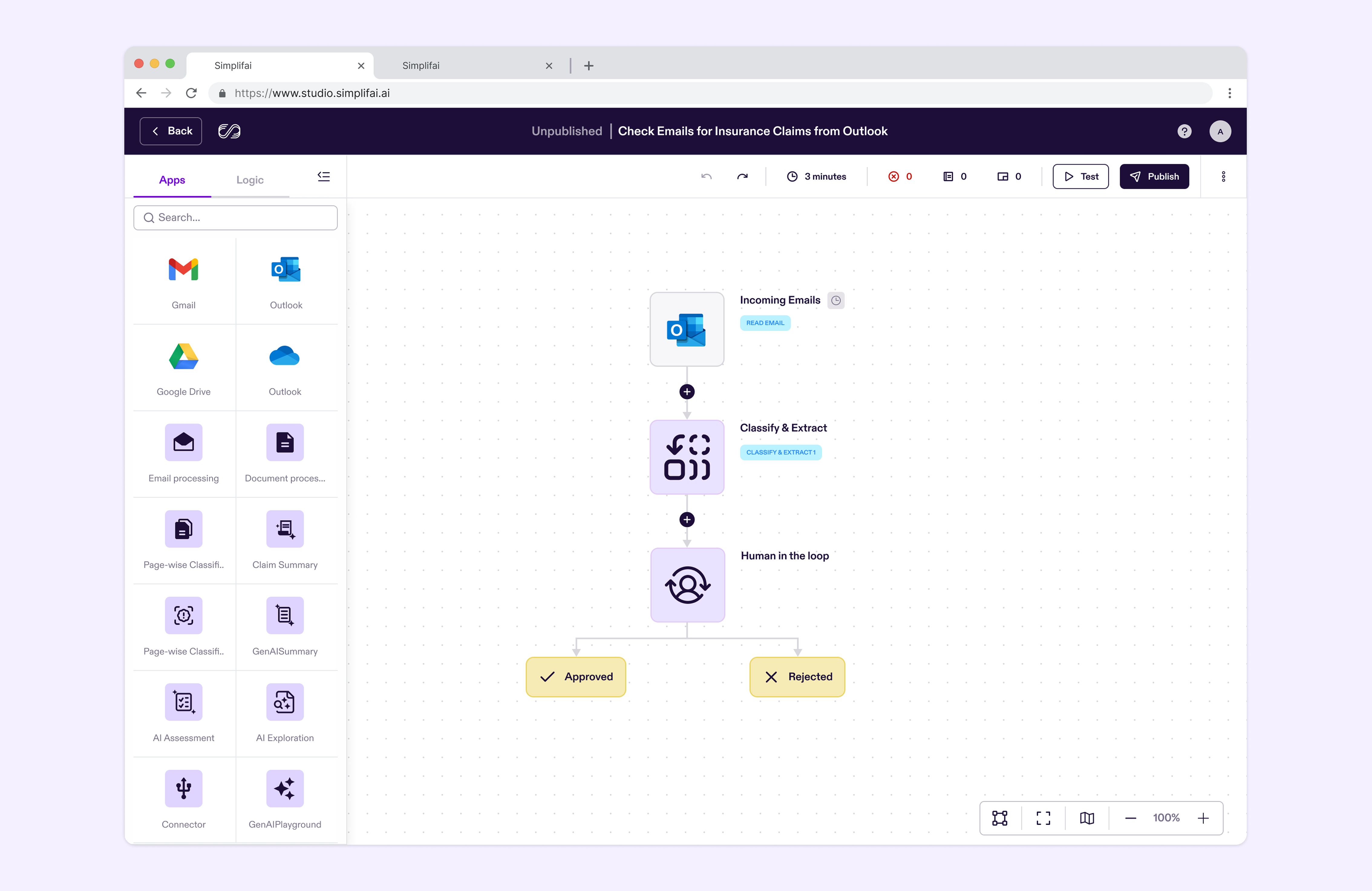
I led the design of a three-zone canvas that lets business owners chain AI Skills, decision logic and connectors themselves, with the intelligence made visible at every step rather than buried in configuration.
Teams went live in one week instead of four, custom engineering effort dropped by 40%, and 90% of claims ran directly through Flow Builder logic.
Insurance automation was brittle. Rigid bots needed an engineer for even the smallest change, so processes fragmented, costs climbed, and people stopped trusting automation to do its job.
What should have been smart automation had turned into patchwork. Claims teams juggled disconnected SOPs, couldn't scale them, and had no easy way to adapt a workflow when the business shifted.
Give business owners a visual flow canvas where they can chain AI Skills, set decision logic and manage versioning. We aimed first at Straight-Through Processing for motor and property claim intake.
No more waiting on engineering to change a process.
Time-to-value in weeks rather than months.
Explainable, domain-first AI instead of generic RPA.
We sat down with core insurance customers in interviews and workshops to map where the work actually broke down, ran a competitor analysis, and built early prototypes that we reshaped with continuous feedback.
“We need to own the process flow, not just beg IT for changes every quarter.”
Wants to push the STP rate up, cut the cost and lead time of changing automation logic, and keep everything auditable and version-controlled.
Blocked by IT dependency, rigid templates that fall over on multi-intent email, no audit trail, and heavy RPA maintenance.
“I spend more time copying and pasting than I do talking to customers or making decisions.”
Wants to cut manual transcription, keep outgoing messages compliant and personal, and spend her energy on the complex claims that actually need judgment.
Blocked by copying data into the CRM, drafting fatigue, constant system switching, and reading whole documents to find one field.
We looked hard at Zapier, Power Automate, Make and UiPath. Four things stood out.
| Tool | Strength | Positioning | Team pricing |
|---|---|---|---|
| UiPath | Full RPA, drag-and-drop editor | BFSI, healthcare, public sector | $1,930/mo |
| Zapier | 1000+ apps, flexible templates | BFSI, sales, marketing, HR | $29/mo |
| Power Automate | AI-enhanced flows, on-prem connectors | BFSI, manufacturing, healthcare | $100/mo |
| Make | Webhooks, multi-path flows | BFSI, marketing, IT services | $299/mo |
The product had to be genuinely AI-native rather than AI-adjacent, and it had to impose a structured flow model rather than maximise freedom.
How do we move from a linear, rigid sequence (RPA) to a modular, intelligent one (AI Flow) while keeping the whole thing compliant and auditable?
We dropped the generic "Action" primitive in favour of three explicit node types: Apps as sources, Logic for conditionals and routing, and AI Skills as the core value. The insight behind that split was simple. People needed to know exactly when intelligence was being applied, so the AI node had to have its own visual language.
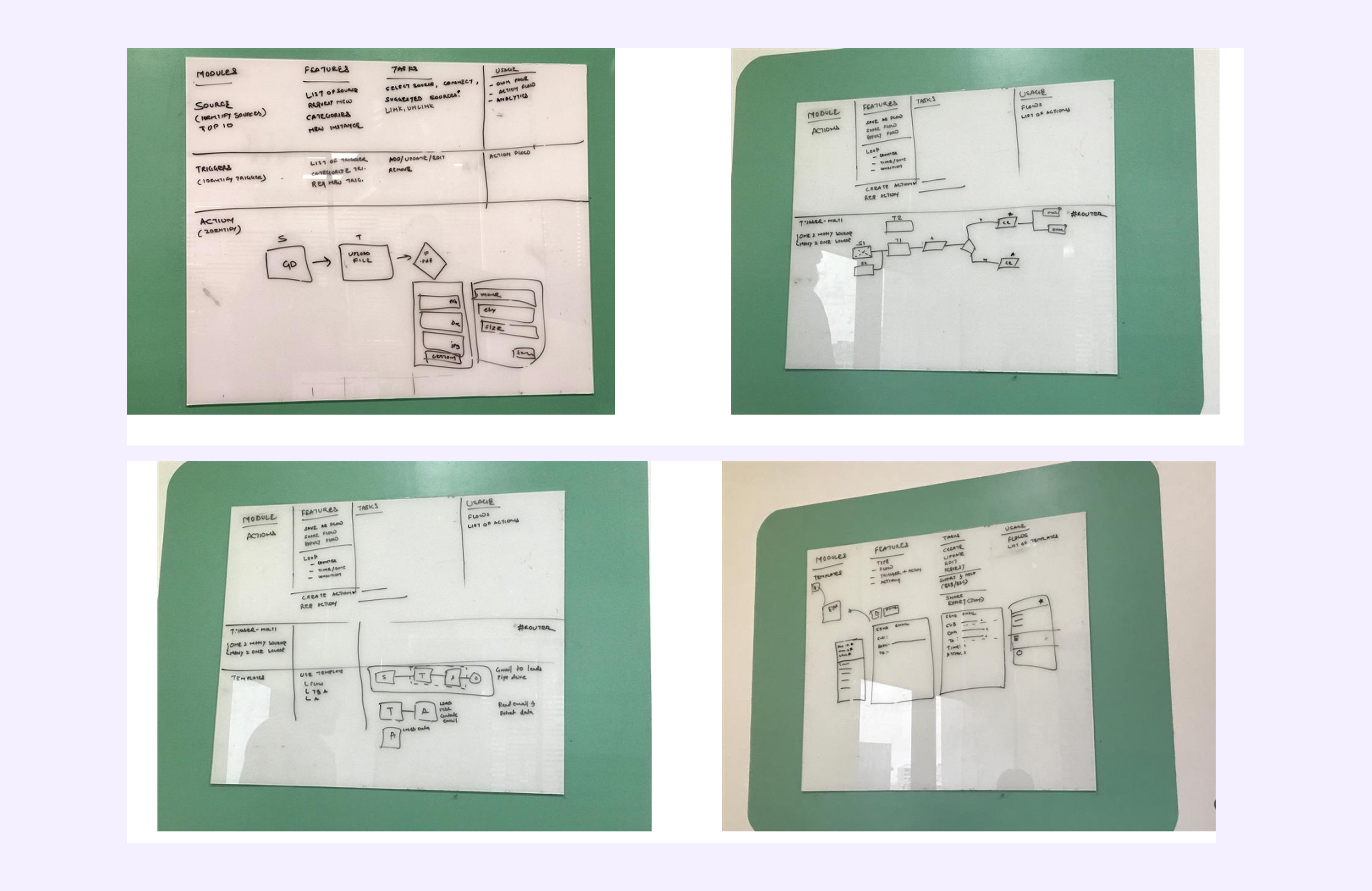
To hit a six-month Beta we cut a fully interactive drag-and-drop canvas, version history and rollback, and prebuilt flow templates. The bet was to ship the most valuable automation flows first and earn the right to build the rest.
How do you visually connect messy inputs like emails and documents to AI skills like extraction and classification, then on to logical routing, without overwhelming the person building it?
The answer was a three-zone architecture that keeps discovery, structure and configuration apart.
An explicit catalog separating Apps, Logic and AI Skills so components are easy to find.
Structured flow mapping. A top-down flow keeps things readable as they grow.
Contextual settings, kept off the canvas so the flow itself stays clean.
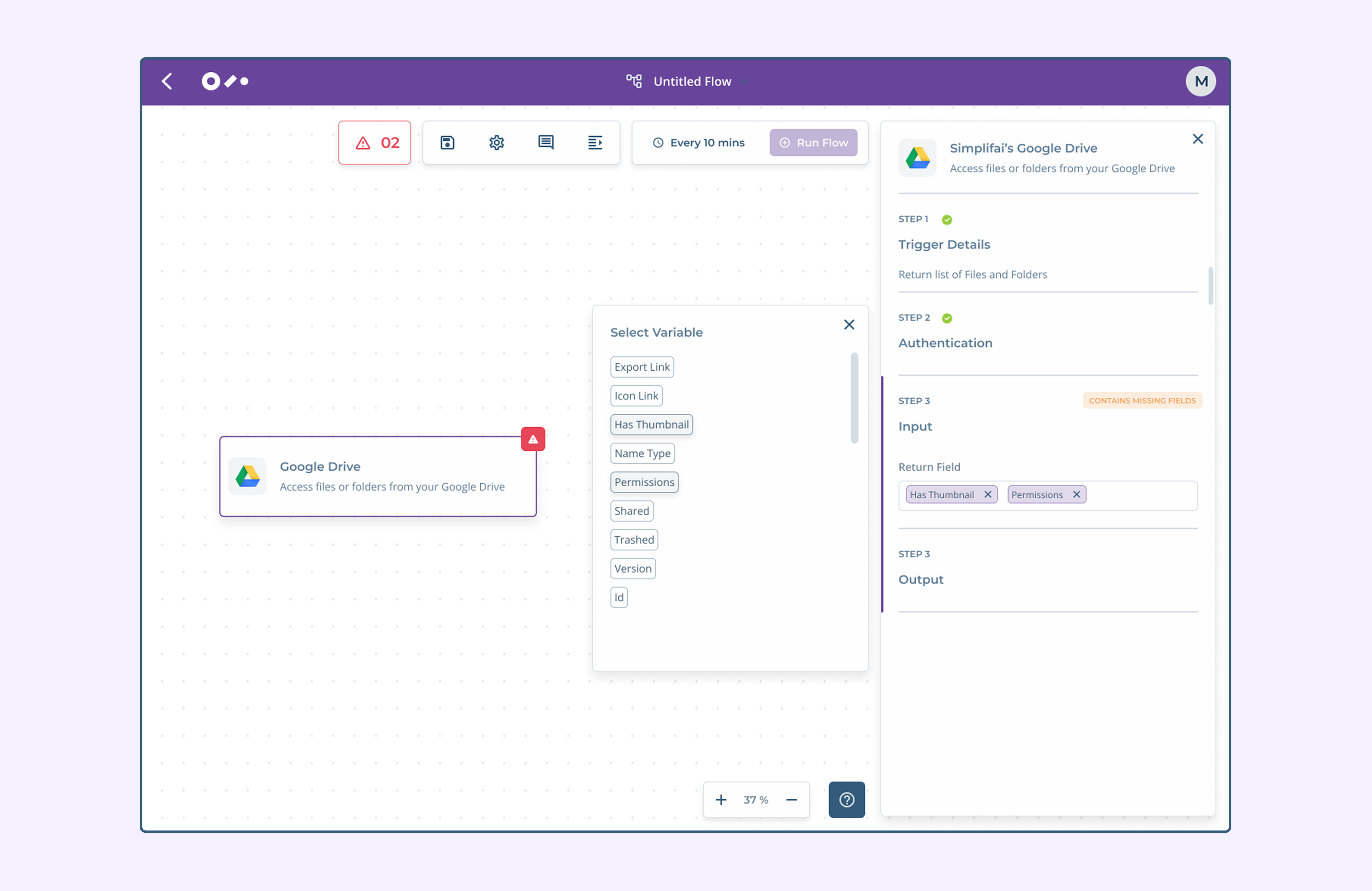
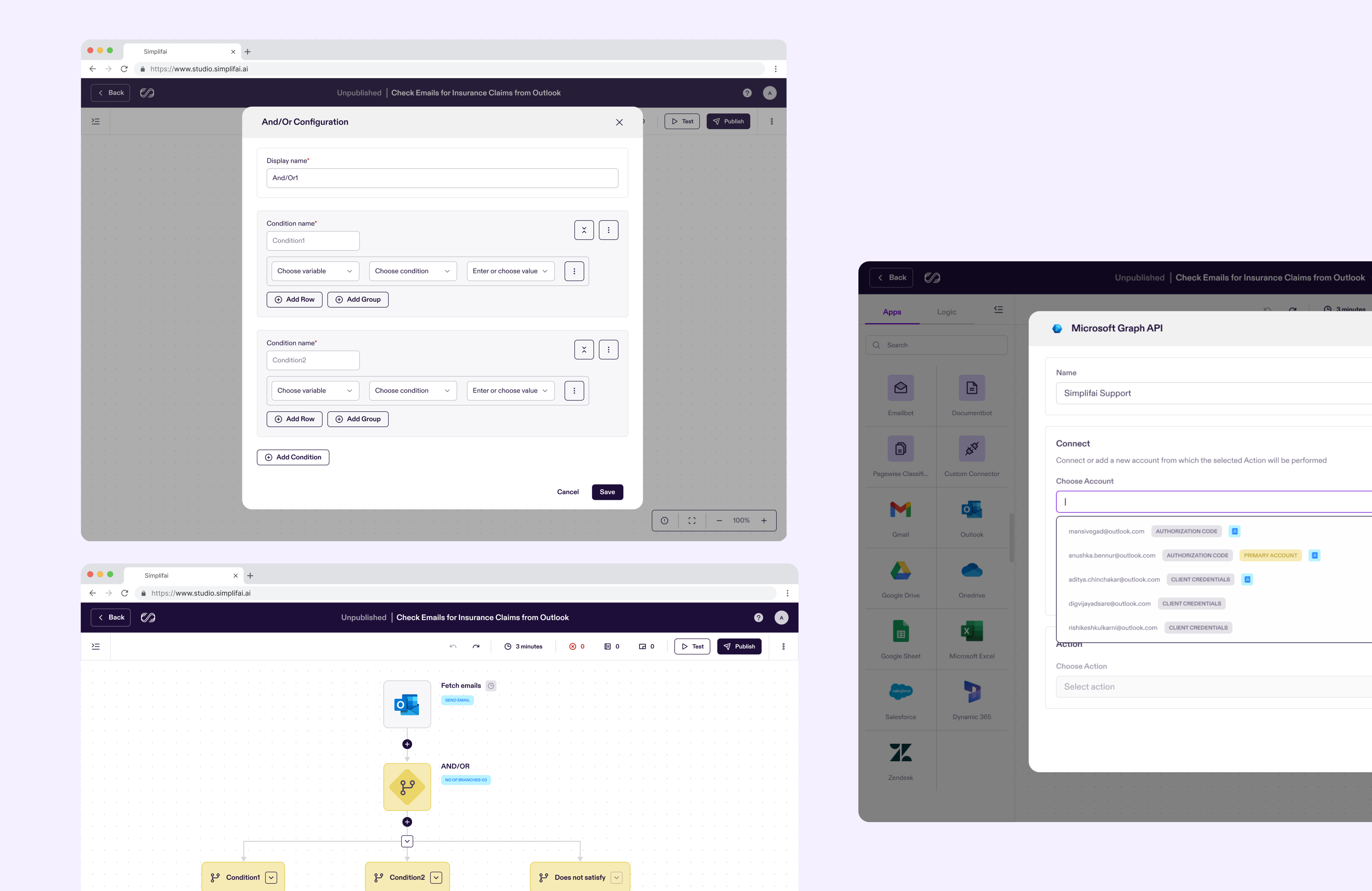
Traditional NLP and ML for classification and entity extraction, replacing brittle rule-based parsing with reliable, low-variance data structuring.
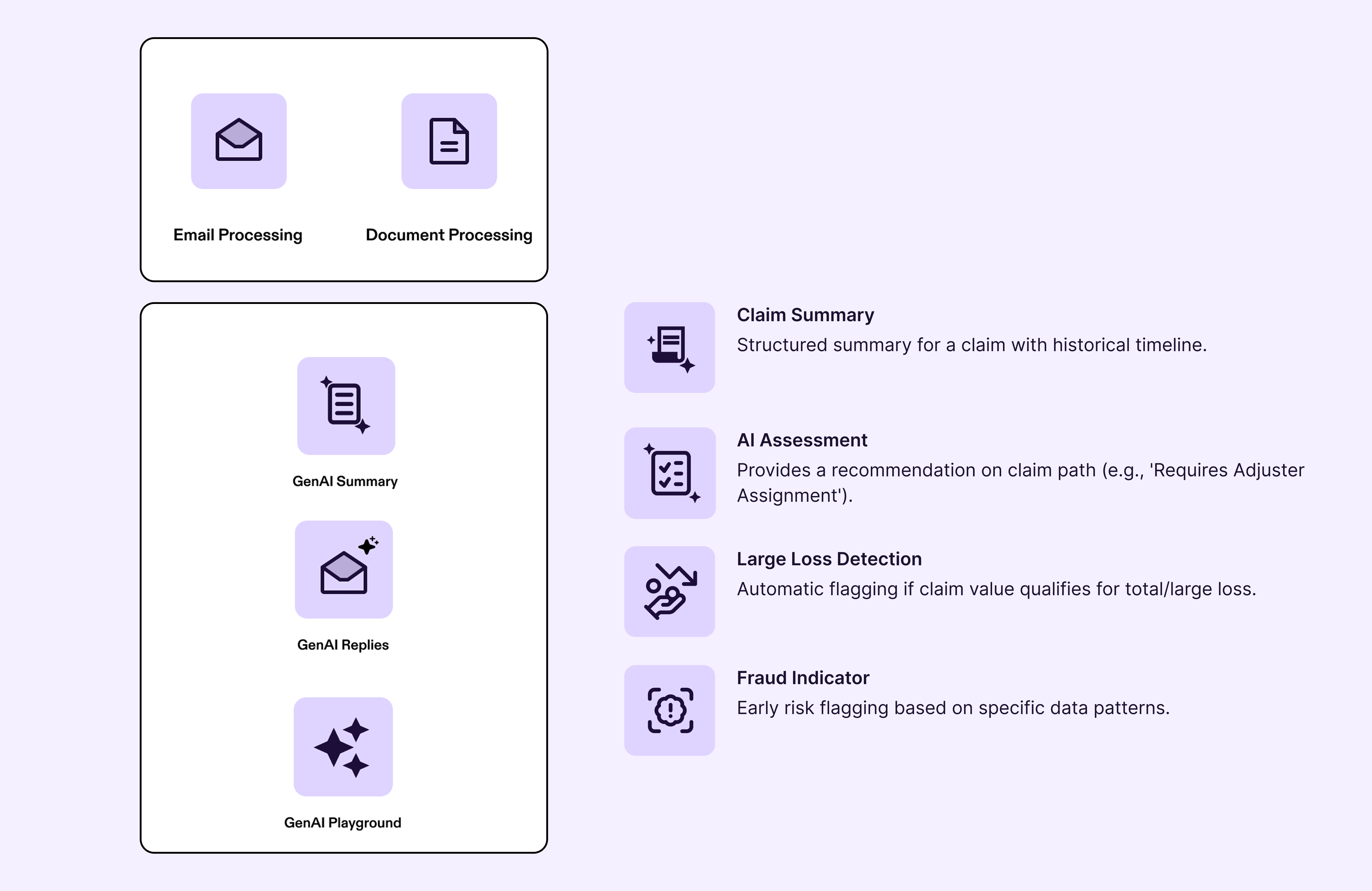
Customer discovery surfaced a need for dynamic, personalised communication that traditional NLP couldn't provide, so we ran GenAI proofs of concept.
We found the highest-value, reusable prompts and turned them into high-trust, governed skills.
Testing the GenAI skills told us which ones were worth productising. Usage patterns showed where people kept coming back, and long conversations with end users told us why. From that we picked the skills we could package and monetise against specific insurance needs, rather than shipping every capability the technology allowed.
Intense time-to-market pressure against a six-month MVP window, on top of early technical debt, since the foundational flow engine was rigid.
“With Flow Builder, our claims intake process became 2x faster. We no longer rely on dev cycles to tweak workflows. It's a game-changer.”
Acorn Insurance
“What impressed us most was how quickly our team picked it up. We were building and testing live flows in under a week.”
Claims Head, Stillwater Insurance